by Joe | Apr 29, 2009 | Headspace, Reviews
‘Headspace‘
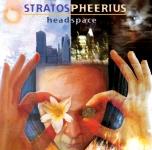
As one can infer from the front cover, the band I am about to describe is really unique as for both genre, techniques used and arrangements. I beg forgiveness in sackcloth and ashes because I neglected attention to their previous works, which means I don’t have a touchstone from the past, but hey…there are so many bands around and too many releases. One lifetime couldn’t be enough even if one dedicated their whole free time to music, and I am one who’s very close to that goal actually!
Anyway, the opener “New Material” begins deceiving you by making you think Stratospheerius are in the vein of Red Hot Chili Peppers, but then the electric violin and track plot bring towards T-Ride and the likes. Excellent are the bass lines by the way.
“Old Ghosts” is a danceable groovy Rock that has some percussions and hooks that have connections to Santana. The amplified guitar and the violin are the protagonists here and they are perfectly in tune; after all, when the guitar didn’t exist yet, the fiddle was already notorious because of rumors about musicians such as Italian Tartini’s and Niccolò Paganini’s; the latter, perhaps because of his otherworldly skill, had devilish tales swirl around him. In fact, he was rumored to:
 Have sold his soul to the devil, or even himself be Satan incarnate
- Use the guts of murdered women as string material for his violins
- Have been imprisoned for gambling debts
Due to the superstitions surrounding him, and the fact that he didn’t receive last rights before death, permission to bury his body in consecrated ground was withheld until five years after his death, after an official inquiry could be made into his orthodoxy, and his son could give a generous ‘donation’ to the church. Moreover the Evil One, as agent of death and creator of dance, became linked to the violin during the Renaissance period, as depicted by paintings such as Pieter Brueghel’s “The Triumph of Death” and Hendrik Goltzius’s “Couple Playing, with Death Behind“. These introductory statements are necessary as every song is made particular by the acoustic or the electric violin, and this is especially valid for “Sold out“; like all string instruments it is more difficult to play than a piano for instance, because you need more precision but this major effort is repaid by the infinite nuances you can achieve; the solo is therefore vital and this one is – without exaggeration – awesome, since it is played in a guitaristic manner.
Coordinates vary completely with the record highlight, “Today Is Tomorrow“, reminding of Genesis in the vocals and Incubus (USA) when the distorted guitar bursts into; the utmost care was delivered to the guitar licks and the bass windings along with the moog psychedelic inserts make it suitable as a single, whereas “Mental Floss” and “Gutterpunk Blues” are perfect candidates for modern Western flick soundtracks; there’re wah-wah, John Zorn, psychedelia, acoustic guitar, guitar shredding and everything is skillfully performed. Each member is a master of their instrument and the emotive links between the 4 members is real considerable.
The elegance of the cover “Driven to Tears“, originally composed by the Police, melts with the fat bass sinuosity, while the frantic and surgical drum work is closer to a gardener’s chisel; decidedly moving are the lyrics, surpassing the other ones that Sting’s band wrote as for their mordant; such topics are still topical, altho the song is about 25 years old.
Multiformity is guaranteed by New Jersey’s musicians but at the same there’s always a link with the full length as a whole; that’s why “Yulia” is no exception, even tho it deal with Jazz Rock in a fairly free and romanticist way, whereas “Long Rd.” manages to combine Funky rock with a fairly melancholic violin. It may sound like a heresy impossible to realize but Joe Deninzon and his pack made it real!
In conclusion, “Heavy Shtettle Part II: Heavier Shtettle” is the only composition written by four hands together with Mr. Alex Skolnick; curb your headbanging, because it is heavy, especially the final part in crescendo, but it is not Heavy metal and it is based on Middle-East percussions and rhythms; another masterpiece indeed!
One more thing to stress out is the excellent recording giving great attention to detail, which is vital to albums like this.
After all it turned out to be a positive thing that a band of this kind has come out these times; I fear that if they’d started in the 80’s they would have been understood by too few people, while now the public is more mature in all. Surely in the 70’s there was more place for avantgarde artists and labels were not as oppressive and market-oriented as nowadays’, yet it seems unlikely that some major would have signed them, as they are too forward with their minds! About the 90’s enough has been said and the decline of music sales and the excess of releases, so I will limit myself to claim that today’s tighter competition has been a timely useful spur to the four-piece.
The violin has never been made so topical like now, and most of the time its notes stay far from nostalgia or melancholy, the way bands such as My Dying Bride have accustomed us. Were they still alive, my country-fellows Vivaldi and virtuosist Paganini would be crying for joy, but also more recent violinists such as Stravinskij, Prokofiev and Sciostakovic would like to attend a Rock gig of the quartet, no shit!
If you have an open mind, tastes that range from Frank Zappa, Mahavishnu Orchestra, Dave Matthews, Radiohead, Jeff Beck, Bela Fleck and Blues Traveler and are in search of something different, go for this record; for once the band’s name doesn’t exaggerate and is up to the expectations created. No, you won’t get bored even after a century by these 10 tracks, my word!
MARKUS GANZHERRLICH – April 20th, 2009
Line-up on this record:
Mack Price – electric and acoustic guitar, vocals
Lucianna Padmore – drums
Bob Bowen – electric bass, moog, vocals
Joe Deninzon – acoustic violin, 6-string fretless violin, 7-string fretted electric violin, mandolin, lead vocals, acoustic guitar
Benny Koonyevsky- guest percussions
by Joe | Jan 29, 2009 | Articles
The Wood Viper Violin: Stratospheerius’ Joe Deninzon On The Electric Violin
by Patrick Ogle

Joe Deninzon of Stratospheerius says you could fill ten books with him talking about the violin. We decided, therefore, to get specific. We talked to Deninzon about his Viper Violin and how he would up playing it. Deninzon comes from a family of classical musicians. His father played with the Cleveland Orchestra for 30 years. He began lessons on the violin at age 6. Then he fell in love with rock music and later on, jazz. But at the time, he learned bass and guitar and shunted his violin to the side. What kid wants to play violin in a rock band?
“A few things happened which were major catalysts in my life. The first was when I heard Stephane Grappeli, my first introduction to jazz violin. The second was when local Cleveland celebrity Michael Stanley invited me to play violin with his band, and the third was when I heard a recording of Jerry Goodman with the Mahavishnu Orchestra.” says Deninzon.
These three things opened him up to using all the musical concepts he had learned and brought him “back” to the violin — the instrument he feels he is and was most adept at. He went looking for an electric violin.
“I did some research and bought a six-string Jensen electric violin, which had the top four strings of a regular violin (E,A,D,G) and went two fifths below with a lower C and F. This instrument served me well for many years, and then I moved to New York and met Mark Wood,” he says. “His Viper used the same Barbara pickups my Jensen did, so the sound was identical, but what sold me on the instrument was the ‘chest support’ system, which allowed me to free up my mouth and chin, since I sing and play violin at the same time, and the frets enabled me to nail the high notes at clubs where the monitor situation was less than ideal. I also loved the fact that it had a seventhth string (a low B-flat), which went a whole step below cello range. Perfect for distorted power chords, or recording cello parts for string arrangements.”
The Viper is a solid body instrument — not acoustic — and as such, it needs to be played through an amp. Deninzon is emphatic when discussing an amp versus playing through the PA.
“I don’t care what anybody tells you, and I’ve had arguments with many soundmen about this. Electric stringed instruments sound like crap when put directly through a house system,” he says. “I have a very strong opinion about this. You wouldn’t run an electric guitar direct in a live situation, would you? Since the Viper has such a large frequency range, I have found it to sound good with Fender Twins or Mesa Boogie Cabinets. The more powerful tube amps usually are best for these instruments.”
Deninzon also likes exploring how different effects sound with the Viper.
“When I played guitar, I became well-acquainted with distortion, wah, delay pedals, etc. I like how those things sound on a violin. Not quite like a guitar, not quite like a violin, something completely different,” he says. “I have two huge pedal-boards I use when playing with Stratospheerius or Metro Strings. I am also developing a book for Mel Bay addressing how string players can get into using effects and incorporating them into their sound.”
In the studio he uses it in many different ways.
“Often when someone is on a budget and can’t afford to hire a whole string section for their project, I play the cello and viola parts on a Viper and the violin parts on a regular acoustic violin,” says Deninzon. “With the right amp and EQ, you can get a pretty realistic cello sound.”
Among the Viper’s best features are the chest support system which incorporates a guitar strap behind the back and an adjustable chest support device. This means you do not have to hold the violin and strain your neck and shoulders. He also likes the way the Viper looks.
“The design looks like a flying V guitar, and is one-of-a kind for an electric violin design. Very sleek. ” he says. “The frets are a great cheat sheet, since in a rock situation, you can’t always hear yourself, and this really helps you nail notes. It’s especially great if you’re a singer and are trying to multi-task on stage.”
He does think there are some things about the Viper that could be rethought.
“My female colleagues have complained to me about getting “viper boob” when they play for extended periods of time. I think he needs to work on adjusting the chest support system to make it more comfortable for women.” he says.
He also says there are intonation problems — but adds most fretted instruments have those.
“The area where the F, C, and G string are has intonation problems, and sometimes the instrument goes flat as you go up the fretboard. On a violin, there is almost no margin of error, and I know Mark is constantly trying to improve these things,” says Deninzon. “When I bought the instrument, the D and A string would get ripped every once in a while around the third fret, and I had to sand the lower frets down a bit to smooth them out and prevent this from happening.”
In addition to Stratospheerius’ new CD, Deninzon is also writing and recording with his new electric string quartet, Metro Strings.
by Joe | Apr 29, 2008 | Articles
Ad Lib
by John Liberty
STRATOSPHEERIUS’ LOCAL DEBUT
Meet Joe Deninzon, the ‘Jimi Hendrix of the violin’
 As a young man, Stratospheerius frontman Joe Deninzon played bass, guitar and violin.
There came a point when he had to pick an instrument, and he went with the violin because he was better at it. The Russian-born musician, who grew up in Cleveland and now lives in New York, was classically trained on the violin and listened to a lot of jazz, but echoing in his heart and mind was the music of Led Zeppelin, Frank Zappa and Aerosmith, among others.
Deninzon found a balance between the two styles with an electric violin. Five years ago, he bought a Viper, a seven-string, solid-bodied wood violin shaped like a flying-V guitar. He bought it from Wood Violins, a New York-based manufacturer of electric violins, violas and cellos.
“I played violin, thinking like a guitar player,” Deninzon said during a phone interview from New York. “I was able to scratch both itches.”
Deninzon and the rest of the progressive-rock band Stratospheerius will make their local debut at 9:30 p.m. Friday at Bell’s Eccentric Cafe, 355 E. Kalamazoo Ave. Admission is $5.
The group — Deninzon, drummer Lucianna Padmore, bassist Jamie Bishop, percussionist Benny Koonyevsky and new guitarist Auerelien Budynek — released its latest CD, “Headspace,” last summer. The band blends rock, jazz, funk, R&B, hip-hop and freewheeling instrumentals. And, of course, there’s the Viper.
People tend to look at his instrument as a novelty, Deninzon said.
“I’m trying to get past that and just make music,” he said. “People kind of freak out because it’s different.”
The animated Deninzon — “I go nuts at live shows” — said “people have called me the Jimi Hendrix of the violin,” although he said he’s constantly looking to refine his sound — “It’s a journey, not a destination.” He also wants to revive a dying part of the live-concert experience by “bringing back the glory of the guitar solos, or, in my case, violin solos.”
by Joe | Nov 29, 2007 | Headspace, Reviews
Headspace
Stratospheerius
Fiddlefunk
 It’s familiar, but like absolutely nothing you’ve heard before. That’s about all this reviewer can muster as a lead for reviewing the latest Stratospheerius release, Headspace. Led by electric violinist/vocalist/mandolinist and former Clevelander Joe Deninzon, the quartet unleashes their fourth full-length effort with an assortment of songs that simply careen from your speakers. Following up their critically-acclaimed Live Wires disc, Headspace contains a frenzied mélange of alt-bluegrass, progressive rock, jazz fusion and funkabilly, with shades of the neo-hippie 90s and space rock for good measure. If Bela Fleck and Frank Zappa had a love child in outer space, it might grow up to sound like these guys do.
Band leader Deninzon brings it from the word go, channeling every bit of voracity through his 6 and 7-string Viper electric violin. No joke, he pushes bandmates Mack Price (guitars, vocals) Bob Bowen (electric and acoustic bass) and Lucianna Padmore (drums) into the stratosphere. You know their name is fitting after the set opener “New Material,” which pinballs through an array of time signatures and chord progressions that stop on a dime. In contrast, “Old Ghosts,” “Today is Tommorrow,” and the manic “Gutterpunk Blues” go for a bigger, louder and faster Jam Band ethos. Pay particular attention to the inimitable cover of The Police classic “Driven to Tears” and the set closer, “Heavy Shtettle II,” which you simply have to hear yourself to believe. Even I’m a bit lost for words about it. Memorable hooks, gravity-defying instrumental prowess and a kitchen sink move toward rock and Zappa-esque fusion fill Headspace. Let it fill yours.
Stratospheerius performs at the Beachland Ballroom, 15711 Waterloo Rd., next Wednesday, November 7 at 8PM. Singer/songwriter and former Clevelander Jann Klose opens the show and Ryan Montbleau headlines. Visit Stratospheerius at http://www.myspace.com/stratospheerius. Visit the Beachland at http://www.beachlandballroom.com/. Pick up the new Stratospheerius CD at http://www.cdbaby.com/.
by Joe | Jul 31, 2007 | Headspace, Reviews
Stratospheerius, Headspace
by Jon Sobel
There’s so much going on on this CD that it could merit an “Indie Round-Up” column all on its own. Stratospheerius’s music can’t be pegged to one genre, but neither is it a simple hybrid of a couple of styles. For that reason, it’s exciting stuff.
Jazz fusion, Stingpop, progressive rock, classical strains, and jam-band spaceouts take turns running through the ten songs on this, the band’s fourth album. Leader Joe Deninzon’s devilish violin weaves the compositions together, and he lends his throaty vocals to some of the tunes, layering attractive melodies over odd time signatures and dynamic, unpredictable arrangements. Think of a much more adventurous version of the Dave Matthews Band, add Steely Dan precision and prog-rock inventiveness, and you’ll get an inkling. There’s also a Police influence that would be quite evident even without the revved-up cover of “Driven to Tears.” The crack musicians deserve mention individually: drummer Luciana Padmore, bassist Bob Bowen, and guitarist Mack Price.
These songs really do sidestep genre, yet one foot remains in accessible pop territory. “New Material” opens with a Celtic jam that flames into a lightspeed funk-rocker. The song is a funny take on creative inspiration and writer’s block: “I need a death threat deadline panic attack/I need a big bolt of lightning to strike me in the ass/Where’s my material/I need new material.” “Mental Floss” is an exciting odd-time instrumental jam, while “Gutterpunk Blues” begins with a delicate-punk (a new term I just made up) mandolin solo (Deninzon again) which leads into crashing heavy-metal riffage and then devolves into wild electric guitar and drum soloing. The jazz fusion elements come to the fore in the slower instrumental “Yulia,” while the pumped-up klezmer of “Heavy Shtettle Part II: Heavier Shtettle” closes the CD with a blast of technical prowess and ear-candy fun.
An interesting and spirited journey into outrageous creativity, this CD is highly recommended for anyone with an adventurous ear, including fans of fusion, progressive rock, the Police, the Kronos Quartet’s pop experiments and collaborations, and fiery fiddling. Sample the music at the Stratospheerius website and their Myspace page, and read a good interview with Joe Deninzon.
Jon Sobel reviews music and theater on a regular basis for Blogcritics, and occasionally comments on politics, world affairs, and life in New York City. He is also a computer professional, musician, and small-time concert promoter in New York City. (His band, Whisperado, can be criticized at will.)
